Every trip to Marrakech begins with the same quiet decision: a riad in the medina, or a hotel in the new town? It sounds like a small choice, but it shapes everything that follows — how you wake up, how far you walk to the souks, whether your host knows your name, and how much of the real city you actually touch. We live inside the old walled city, a few minutes from Jemaa el-Fna, and we have welcomed travelers who arrived unsure and left converts. So let us make the comparison honestly, then help you decide.
What is a riad?
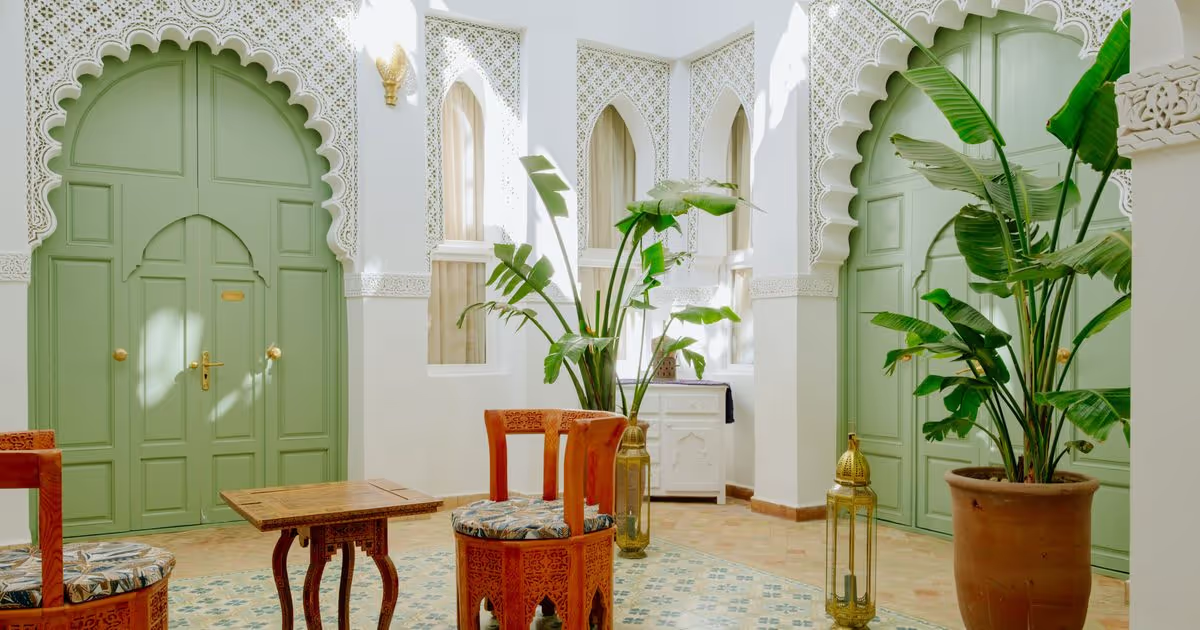
A riad is a traditional Moroccan house built inward, around a central courtyard open to the sky. The word comes from the Arabic for garden, and that is the heart of the design: a cool, green, often fountain-fed patio that the rooms wrap around. There are no windows facing the street — the architecture turns its back on the noise of the alley and keeps all its beauty inside, for you.
For centuries these were family homes for the medina's merchants and notables. Many have now been restored, suite by suite, into intimate guesthouses. A boutique riad typically holds only a handful of rooms, a rooftop terrace, and a small, devoted team. Staying in one is less like checking into accommodation and more like being lent a private Moroccan home with someone on hand to look after you.
Riad vs hotel: the real differences
Atmosphere and architecture
This is where the gap is widest. A large hotel is built outward, with corridors, lobbies and uniform rooms designed to feel the same in any city. A riad is built around silence and craft: hand-cut zellij tilework, carved cedar, tadelakt plaster walls, lanterns throwing patterns across a courtyard. The temperature drops as you step inside off the street, the sound of the medina softens to a murmur, and you feel, immediately, that you have arrived somewhere specific. No two riads are alike, because no two were built the same.
Location in the medina
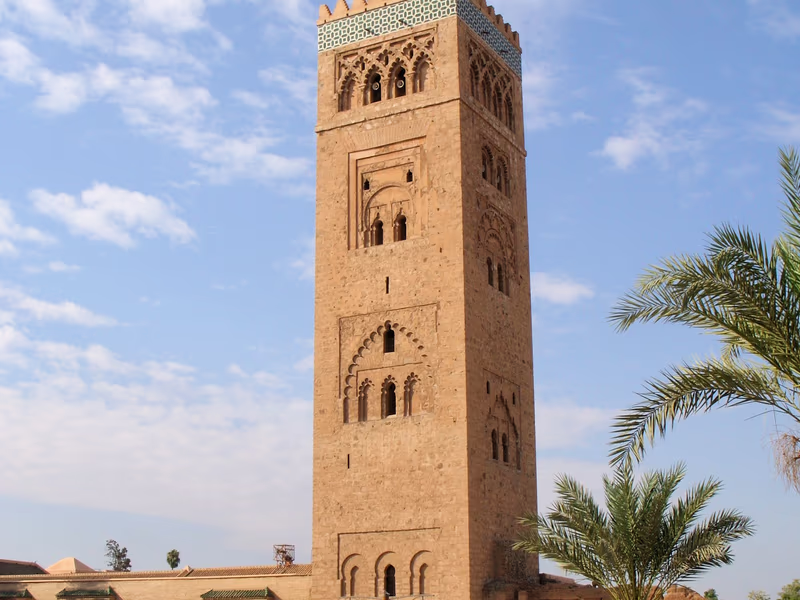
A riad puts you inside the story. You wake up within the walls of a UNESCO World Heritage medina, and the souks, palaces and food stalls are a walk away, not a taxi ride. Many Marrakech hotels sit in Gueliz or Hivernage, the modern districts — comfortable, but ten or fifteen minutes by car from the old city you came to see. The trade-off for a medina location is that cars cannot always reach the door; the riad arranges a porter to carry your bags the final stretch through the alleys, which is part of the welcome rather than an inconvenience.
Personalized service
At a hotel you are a room number processed by a rota of staff. At a small riad you are a guest of the house. The same team greets you, remembers that you take your coffee on the terrace, books your hammam, and knows which rug seller will not overcharge you. A good riad runs on relationships, not scripts. That intimacy is the single thing returning guests mention most.
Price and value
Riads are not automatically cheaper or pricier than hotels — but the value sits differently. A boutique riad rate usually includes a generous Moroccan breakfast, the use of the courtyard and rooftop, and a concierge who plans your days. You are paying for character and care rather than square footage and a chain logo. And when you book direct with the riad rather than through a third-party platform, you almost always pay less for the same room, because there is no agency commission baked into the price.
Privacy and intimacy
With only a few suites, a riad is quiet by design. No conference groups in the lobby, no queue at breakfast, no neighbors slamming doors down a long corridor. Couples find it romantic; families find it calm; solo travelers find it safe and easy. The whole house can feel, for a few days, almost like yours.
Food and breakfast
Hotel breakfast is often a buffet you have eaten in a hundred other cities. A riad breakfast is cooked that morning and carried up to the terrace or out to the courtyard: msemen and beghrir pancakes, fresh bread, local honey and olive oil, eggs, seasonal fruit, mint tea poured from height. It is a small daily ceremony, and it sets the tone for the day far better than a chafing dish ever could.
When a hotel might suit you better
We will be honest, because the right answer is not always a riad. A large international hotel makes sense if you want a big resort pool and sun loungers, a gym and spa under one roof, full wheelchair-accessible facilities throughout, or a base in the modern Gueliz district near its bars and galleries. Business travelers who need conference space and a desk, or families who want a kids' club and lots of room to spread out, may also lean toward a hotel. If you are nervous about navigating the medina's alleys at all, a hotel on a main road can feel reassuring on a first night — though a riad's porter and pickup usually dissolve that worry quickly.
Why Riad Zeitoun Palace
If a riad is the right choice for you, here is why ours earns the trip. Riad Zeitoun Palace is a luxury boutique riad of just six suites in the heart of the Marrakech medina, at 120 Derb Sidi Moussa, a five-minute walk from Jemaa el-Fna. Each suite has its own character, from the honeymoon-ready Bahia to the family-sized Sahara — you can see them all on our suites page and pick the one that fits your trip.
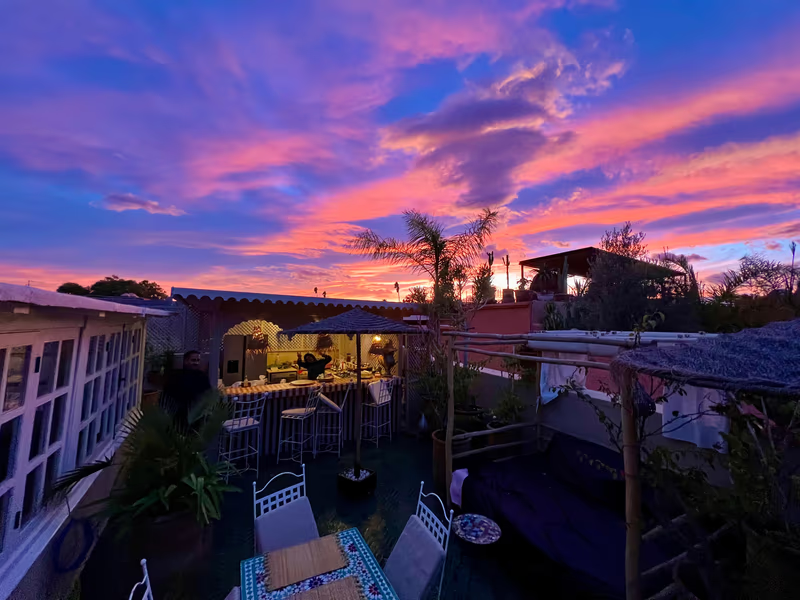
Beyond the rooms, the house is built for slowing down. Our solar-heated spa and hammam is open from 9am to 9pm, so a traditional steam and scrub is a few steps from your door rather than a taxi across town. The rooftop terrace looks out over the medina toward the Atlas Mountains, a Moroccan breakfast is included every morning, and our in-house digital concierge helps you book everything from cooking classes to Atlas day trips — browse a few on our experiences page. A private airport transfer is just 22€ per vehicle for one to seven passengers, so your arrival is handled from the moment you land.
And because you book direct, you get our best-rate guarantee — typically up to 10% less than the same suite on Booking or Airbnb, with a real person on WhatsApp to answer questions before you arrive.
Frequently asked questions
Is it safe to stay in a riad in the medina?
Yes. Riads are private homes behind a single locked door, often quieter and more secure than a large hotel. The medina is busy and very walkable, and your riad will arrange a porter to guide you and your luggage through the alleys on arrival, so you never have to find the door alone.
Do riads have pools?
Many do, including small courtyard plunge pools, though they are more intimate than a hotel resort pool. At Riad Zeitoun Palace the focus is our solar-heated spa and hammam and a large rooftop terrace. If a full swimming pool is essential to your trip, tell our concierge and we will advise on the best option.
Are riads good for families and honeymooners?
Both, very much so. The quiet, enclosed layout is calm and safe for children, while the romance of a private courtyard and candlelit terrace makes a riad a favorite for honeymoons. Our Sahara suite suits families, and the Bahia suite is designed for couples.
How do I book a riad?
Book directly on the riad's own website for the best price and a real conversation with the team. On riadzeitoun.com you can check live availability, message us on WhatsApp at +212 666 70 88 68, and lock in our best-rate guarantee without any third-party commission.
The short answer
For most travelers, a boutique riad is simply the better way to experience Marrakech: more atmosphere, a better location, warmer service, and real value when you book direct. A hotel still has its place for resort facilities and the modern town. But if you want to wake inside the medina, in a house with a story, with a team who treats you like a guest rather than a guest number — that is what a riad does, and it is what we do every day.